
Negotiating with Leverage Suppliers: Maximize Savings Without Overplaying Your Hand
By Anupam Aggrwal, CEO & Co-Founder · 13 April 2026
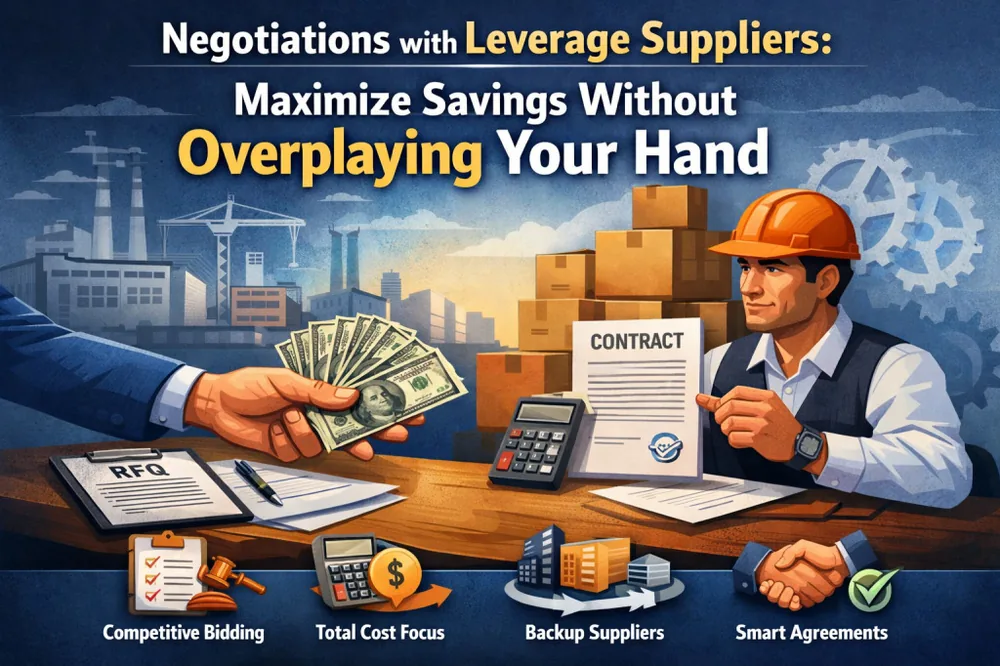
Most procurement leaders I speak with know they have negotiating power in certain categories. They can feel it. Multiple suppliers, reasonable alternatives, no single source dependency. The conditions are right. Yet when I look at how those same categories are actually being negotiated, the savings rarely reflect the opportunity. Leverage items are the most underutilized source of procurement value in most mid-sized companies, and the reason is almost never a lack of power. It is a lack of structure.
If you would like a quick refresher on how spend categories are classified before diving in, you can refer to this simple guide: Using the Kraljic Matrix.
This is the second blog in a four part series on negotiating across the four Kraljic categories. Each blog focuses on a different category and the specific negotiation approach that works best for it. You can read the other blogs in the series here:
Strategic Items: Negotiating with Strategic Suppliers: Protect Your Position Without Damaging the Relationship
Bottleneck Items: Negotiating with Bottleneck Suppliers: Secure Supply Without Giving Away Control
Routine Items: Negotiating with Routine Suppliers: Cut Costs and Complexity at the Same Time
Now let us get into leverage items, where you have the power and the opportunity. The only question is whether you are converting it into real savings.
What Are Leverage Items in the Kraljic Matrix?
Leverage items are categories with high business impact but low supply risk. These are significant spends where multiple qualified suppliers exist and switching from one to another is relatively straightforward. That combination gives you a natural and meaningful advantage in negotiations. The question is whether you are actually using it.
Key Characteristics of Leverage Items
You will typically see these patterns in leverage categories.
- There are many capable suppliers available
- Specifications are fairly standard or comparable
- Switching suppliers is feasible without major disruption
- Spend value is significant enough to attract supplier interest
- Suppliers are willing to compete for your business
This is the ideal situation for procurement. But many teams do not fully use this advantage.
Why Leverage Items Need a Different Negotiation Strategy
With leverage items, your objective is clear. Maximize value using competition. But this is not just about pushing prices down blindly. A well executed Kraljic Matrix negotiation strategy for leverage items helps you achieve better pricing, better service, and better terms without damaging supplier interest.
Done right, suppliers compete for your business. Done poorly, they walk away or reduce commitment.
Step by Step Kraljic Matrix Negotiation Strategy for Leverage Items
Here is a simple and practical approach that you can implement without external consultants.
Step 1: Consolidate and Standardize Your Demand
Before going to the market, clean up internally.
- Combine fragmented demand across plants or departments
- Standardize specifications as much as possible
- Remove unnecessary variations
This increases your negotiation power immediately. Larger and clearer demand attracts better competition.
Step 2: Create a Strong Supplier Pool
Do not depend on your existing vendors alone.
- Identify multiple qualified suppliers
- Pre qualify them on technical and commercial parameters
- Ensure at least 3 to 5 serious participants
The strength of your negotiation depends on the quality of your supplier pool.
Important Note: Before diving furterh, there is a question worth asking first. What do your suppliers actually think about your organization? Are you a buyer they genuinely want to compete for, or simply one they tolerate? If you want to improve your standing in the supplier market before applying any of the steps in this blog, this is worth reading first: Are You a Buyer Worth Competing For?
Step 3: Use Competitive Bidding Smartly
Leverage items are ideal for structured competition.
- Run RFQs or eAuctions where appropriate. You can read: How eAuctions Can Drive Measurable Cost Savings for Your Business.
- Select right type of eAuction – there are over 200 types of eAuctions for different situations. To know more, click here.
- Keep the process transparent and time bound
- Ensure all suppliers are bidding on the same specifications –
Competition should be fair and visible. That is what drives real price discovery.
Step 4: Focus on Total Cost, Not Just Price
Even in leverage categories, price alone is not enough.
- Evaluate logistics cost
- Payment terms
- Service levels
- Lead time commitments
A slightly higher price with better overall value may still be the right decision. Your ideal goal is to minimize Total Cost of Ownership (TCO).
Step 5: Use Volume as a Negotiation Lever
Suppliers value predictability.
- Offer volume commitments in exchange for better pricing or terms
- Bundle similar categories where possible
- Create long term demand visibility
This creates a win win situation while improving your commercial outcome.
Step 6: Keep Backup Suppliers Active
Even though supply risk is low, do not become complacent.
- Rotate a small share of business to alternate suppliers
- Keep them engaged and qualified
- Avoid over concentration with one supplier
This ensures that your leverage position stays intact over time.
Step 7: Negotiate Commercial Terms Beyond Price
Many teams stop after price negotiation. Check if you further tighten:
- Negotiate payment cycles
- Penalty and incentive clauses
- Delivery flexibility
- Warranty or service support
These elements often create more value than small price reductions.
Step 8: Close with Clarity and Speed
Once you have achieved competitive outcomes, close quickly. Delay creates uncertainty and supplier fatigue. There may be changes in geo-political situations etc.
- Clearly communicate award decisions
- Finalize contracts without unnecessary back and forth
- Maintain professionalism throughout
This builds credibility in the supplier market – and your contract or PO is the final closing not the negotiatoin process.
Building a Long Term Leverage Strategy
Leverage items are not just a one-time savings opportunity. Used well, they can become the engine that drives consistent, repeatable procurement value year after year.
Your long term plan for leverage categories should be built around a few disciplined habits. Re-bid these categories periodically so that incumbent suppliers never get too comfortable. Track supplier performance consistently so that your decisions are based on data, not relationships. Consolidate demand wherever possible to increase your attractiveness as a buyer and strengthen your negotiating position. Invest in developing alternate suppliers so that your competitive options remain real and credible over time. And continuously review specifications to ensure you are not paying for more than you actually need.
The idea behind all of this is straightforward. Keep the competition alive, keep it structured, and the savings will follow.
Where procurEngine Fits In
If you are finding it difficult to identify your leverage suppliers or structure a competitive negotiation strategy around them, we are happy to help.
We work closely with procurement teams to run competitive events, manage supplier pools, and build simple, actionable approaches that maximize savings without overplaying your hand.
Connect with us at: www.procurengine.com
People Also Ask
What are leverage items in the Kraljic Matrix
These are high value categories with low supply risk where multiple suppliers are available and switching is easy.
How do you negotiate leverage items effectively
Use competition, consolidate demand, run structured bidding, and evaluate total cost instead of only price.
What is the main advantage of leverage items in procurement
The ability to create competition among suppliers and achieve better commercial outcomes.
How can procurement maximize savings in leverage categories
By standardizing specifications, increasing volumes, and running transparent competitive processes.
Is supplier relationship important for leverage items
Yes, but the focus is more on performance and competitiveness rather than long term dependency.
Questions about this article.
What is a Kraljic Matrix negotiation strategy for leverage items
Why are leverage items ideal for competitive bidding
How many suppliers should participate in a leverage negotiation
Should you always choose the lowest price supplier
How do you maintain negotiation power over time
Can reverse auctions be used for all leverage items
About the Author
Anupam Aggrwal is the CEO and Co-Founder of procurEngine and has spent more than 25 years handling negotiations and helping organizations improve procurement performance through process transformation, digitalization, and strategic sourcing. He also gives guest lectures to supply chain students at Mays Business School at Texas A&M University and the Eli Broad Graduate School of Management at Michigan State University.