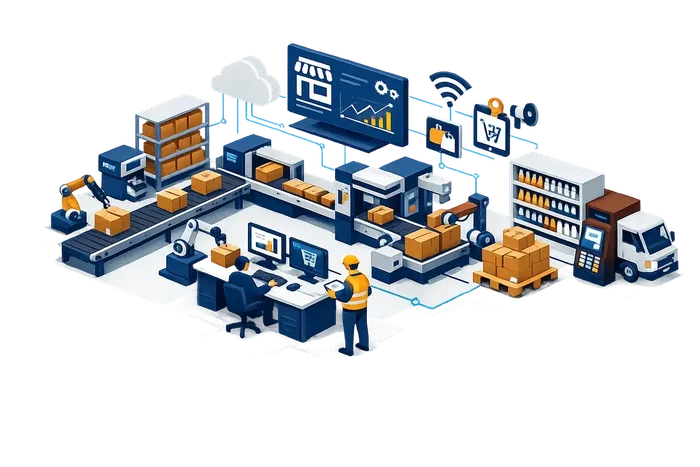
Fast-cycle sourcing events, private-label supplier management and demand-aligned procurement - built for categories where the season won't wait for a slow RFP.
What are the biggest procurement challenges in retail and consumer goods?
Retail and consumer goods procurement must manage changing demand, supplier ecosystems, product categories, packaging, logistics, indirect spend, and often complex multi-location operations. Procurement teams need to balance cost, availability, quality, supplier performance, speed, and consumer demand. Digital procurement software can connect sourcing, supplier management, contracts, purchasing, and spend analysis. This helps organizations improve visibility into supplier relationships and make more informed sourcing decisions across rapidly changing categories.
How can retailers improve supplier onboarding and vendor management?
Retail supplier onboarding should capture relevant business, commercial, product, compliance, and operational information while creating a consistent approval process. Vendor management software can centralize supplier records, documents, contracts, performance information, and communication. This helps procurement teams reduce fragmented supplier data and improve visibility across large supplier networks. A structured onboarding process also makes it easier to apply category-specific requirements and manage suppliers throughout the relationship lifecycle.
How can retail procurement improve spend visibility across stores and business units?
Retail organizations often have purchasing activity distributed across stores, regions, categories, departments, and corporate functions. Spend analysis can consolidate this information and identify supplier concentration, duplicate purchasing, fragmented demand, and off-contract spend. Procurement teams can use these insights to consolidate requirements, improve sourcing strategies, negotiate more effectively, and strengthen contract compliance. Better spend visibility also helps CFOs and procurement leaders identify cost optimization opportunities across a broad and distributed purchasing environment.
How can procurement automation support fast-moving retail operations?
Retail procurement requires speed, but purchasing decisions still need appropriate governance. Procurement automation can simplify demand intake, approval routing, supplier selection, purchase orders, and invoice processes. Configurable workflows can support different categories, business units, stores, and approval thresholds. This enables employees to purchase efficiently while helping procurement teams maintain visibility and control. Automation also supports more consistent procurement data, which improves spend analysis and category management over time.
How can retailers manage supplier risk and supply continuity?
Retailers depend on suppliers for products, packaging, logistics, technology, facilities, and other operational services. Supplier risk management can help organizations monitor performance, dependency, documentation, geographic exposure, and commercial relationships. Procurement teams can combine supplier data with spend analytics to identify concentration and critical supplier dependencies. This supports more proactive vendor management, supplier collaboration, alternate sourcing strategies, and ongoing performance reviews.
How does sustainable procurement support retail and consumer goods organizations?
Sustainable procurement can help retailers and consumer goods companies incorporate environmental, social, ethical, and responsible sourcing considerations into supplier selection and category strategies. Procurement teams can define relevant supplier requirements, collect supporting information, and incorporate sustainability considerations into sourcing and vendor management processes. Digital procurement platforms can help centralize supplier data and support reporting across categories. The approach should align with the organization's sustainability priorities and the specific characteristics of its supply chain.
We use cookies that are necessary for the site to function, and, with your consent, analytics and marketing cookies to understand usage and improve our content. See our Cookie Policy for details.
Cookie Preferences
Choose which categories of cookies you're comfortable with. You can change this at any time from the link in the site footer. See our Cookie Policy for full detail on each category.
Strictly Necessary
Required for the site to function (security, load balancing). Cannot be switched off.
Analytics
Helps us understand how visitors use the site so we can improve it (e.g. Google Analytics).
Marketing
Used to measure and improve advertising campaigns (e.g. Google Ads, LinkedIn Ads).