
One coordinated flow
Intake, sourcing, contracts and P2P work as one process, not disconnected steps.
Policy-aware orchestration connects intake, sourcing, contracts and P2P into a single coordinated flow - so every request follows the right path, and every handoff is governed.
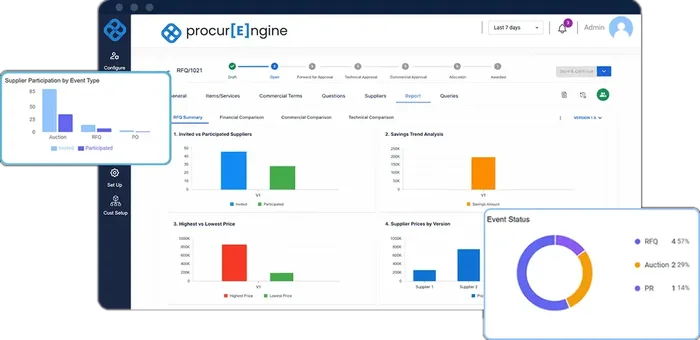
Intake, sourcing, contracts and P2P work as one process, not disconnected steps.
Every handoff checks against configurable policy - no gaps for exceptions to slip through.
Automated handoffs remove the waiting time between disconnected systems and teams.
Track any request across its entire journey from a single view.
Coordinate intake, sourcing, contract and ERP systems as one governed journey.
Approval thresholds, routing rules and escalation paths by category, region and spend level.
Policy violations and stuck workflows are surfaced automatically, not discovered in audit.
The problem orchestration addresses is rarely inside any single system. It is the space between them: the requester who does not know whether their need is a catalogue order, a call-off against an existing contract, or a competitive event, and who therefore opens whichever tool they used last. The request is not wrong so much as misrouted, and every downstream consequence follows from that first choice.
Most attempts to fix this add policy. More approval layers, a longer purchasing manual, training. That treats the symptom: people route around the process because the compliant path is harder to find than the non-compliant one, not because they disagree with it.
Putting intake, sourcing, contracts and purchasing on one platform removes the routing decision from the requester entirely. They describe the need; policy decides the path based on value, category, contract coverage and supplier status. The compliant route becomes the easy route, which is the only version of governance that survives contact with a deadline.
This is a different answer to the one taken by coordination tools that sit above an existing stack. Both are legitimate - consolidating suits organisations willing to change systems, layering suits those who cannot. Our neutral explainer on procurement orchestration sets out the trade-off without arguing for either.
Who uses it. Requesters across the business, who mostly should not have to understand procurement at all; category owners, who need requests to arrive against the right strategy; and the procurement lead accountable for policy actually being followed rather than merely published.
What it connects to. It spans intake, sourcing, contracting and purchasing, with the ERP as the financial system of record. The policy engine is shared, so a threshold changed once applies everywhere rather than being re-implemented per system.
What it does not do. It cannot resolve a policy the organisation has not agreed. Orchestration enforces a decision; it does not make one, and encoding an ambiguous rule produces consistent confusion rather than clarity.
Policy-aware orchestration, mapped to your own process.