
Does Rogers' Diffusion of Innovation Theory Play Out in SaaS Digital Adoption?
One innovator sponsor, limited early support from the rest of the team - and a slow build that eventually became large-scale, enterprise wide adoption across the organization.
By Anupam Aggrwal · 18 July 2024
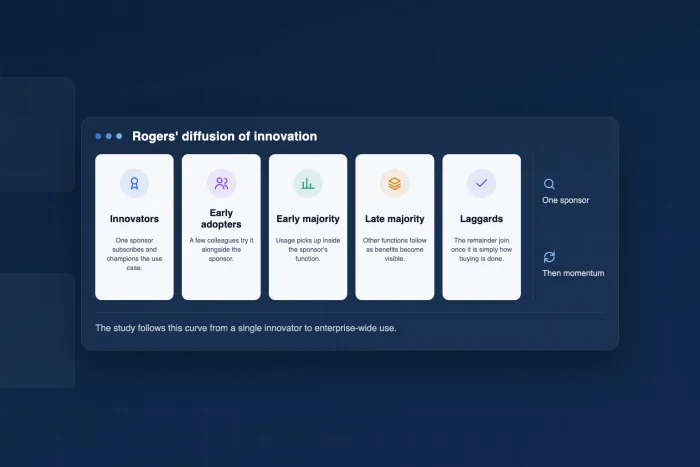
Technology Adoption Case Study
Rogers' theory of diffusion of innovation depicts how groups of consumers adopt a new technology over time - starting with a small share of innovators and early adopters, and gradually expanding until market share reaches close to 100% following complete adoption.
Customer Engagement
One of our customers subscribed to our platform because of an innovator, per the theory above, within the organization. While the use case was being demonstrated by us to the sponsor, she saw merit in adopting it across the SCM value chain for its sheer effectiveness and simple-to-use UI/UX. However, there was little or no support from any of the other group members. Our attempts were generally met with the well-rehearsed tactic of asking for a 1-2% change in functionality while holding back on the 98-99% of utility already on offer.
Progress and Adoption
Over time, usage picked up within the function of the sponsor, and benefits started to grow month after month. By then, we had also complied with some of the minor changes requested by other category buyers. Suddenly, we saw an impressive jump in the number of users and events being conducted on the platform.
Impact on the Organization
We have been pleasantly surprised by the large-scale adoption across the organization (from routine purchases to high-value, multi-million-dollar spend) and by the growing positive impact on the bottom line.
Conclusion
We truly believe this pattern could play out across most organizations - we just need the minority of innovators and early adopters to build momentum and create a large impact. We hope decision-makers in organizations are listening, and will experiment with the above.